
University Students Placements
Community Psychology Students Placement
H-CAS has in the past years worked in partnership with Hull University, in providing community Psychology placement for Post graduate Psychology students.
The Community Psychology placement is an opportunity for Trainee Clinical Psychologists of the University of Hull to begin to develop an understanding of social and health inequalities and their relationship with distress and the impact of their own value base on working with diverse and/or marginalised populations.
These placements aim to improve the readiness of clinical psychologists to work flexibly, creatively, and fairly in partnership with others in community settings in the changing health and social care landscape. As trainees develop their own placement scope and goals, there is much networking, collaboration and co-working needed between the trainee and the service in defining these.
A reflection on H-CAS work by Hull University Psychology students on placement
What is H-CAS
- Building the capacity of the minority ethnic community members.
- Providing free advice and advocacy.
- E.g: money/debt issues, housing, employment,
benefits, community involvement, immigration, health and general well-being.
Partner Organisations
- Welcome House
- HANA
- Bora Shabaa
- YAC
- Hull Mosque
- Humberside Police
Access to Mental Health Services
- Distrust of people in power.
- MH stigma.
- Patients from minority ethnic backgrounds wait longer for, and have worse outcomes, from referrals than their white counterparts.
- Expectations of results.
- Language barriers – communication, timeprovided to do so & structure of sessions.
Difference and Diversity
- H-CAS considers the diverse needs of serviceusers (the integration star).
- Connecting individuals to communities.
- Cultural humility.
- Collaborating with faith leaders andreligious organisations.
- H-CAS aims to empower individuals andcommunities.
Power
- Social and cultural capital – network of relationships andcultural competencies within work, families andcommunities.
- Legal power and impact – fear, previous understanding ofit. Links to Coercive power – war and conflict.
- Economic and material, education, money, housing, safety and security.
- Ability to control and understand these powers and their impact.
Language
- Not feeling heard.
- Ability to communicate.
- Role it has within building communities.
- Isolation.
- Perception of social status.
- Impacting understanding -letters, “rules”, role of services.
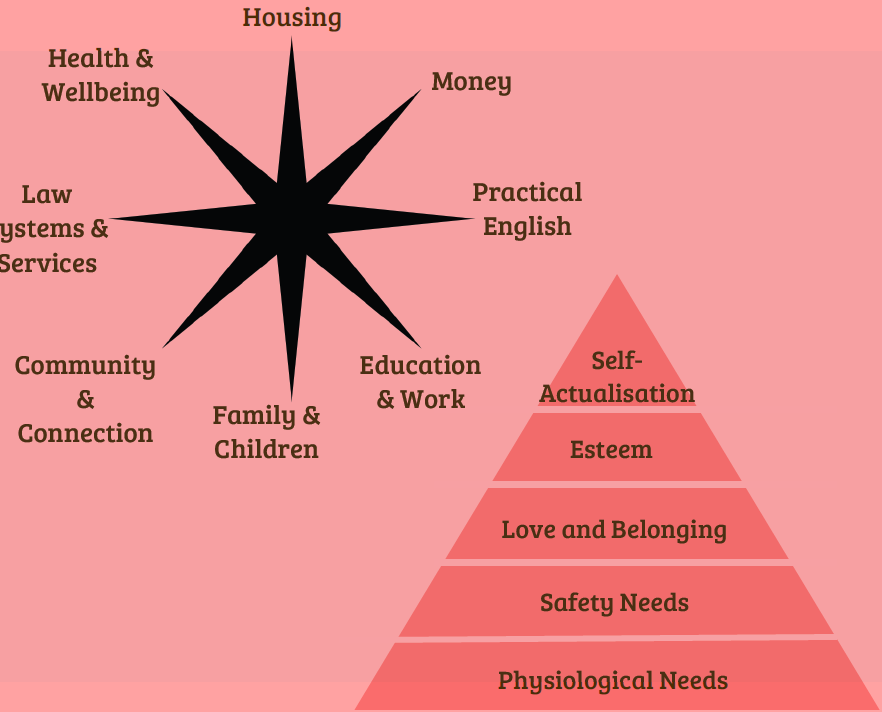
Integration Start
- Providing advice from a holistic view.
- Recognising the relationship between the integration star and Maslow’s Hierarchy of Needs. Are the basic needs being met?
- Supporting people to become independent and confident without H-CAS.
- Aspects in the integration star interact with each other.